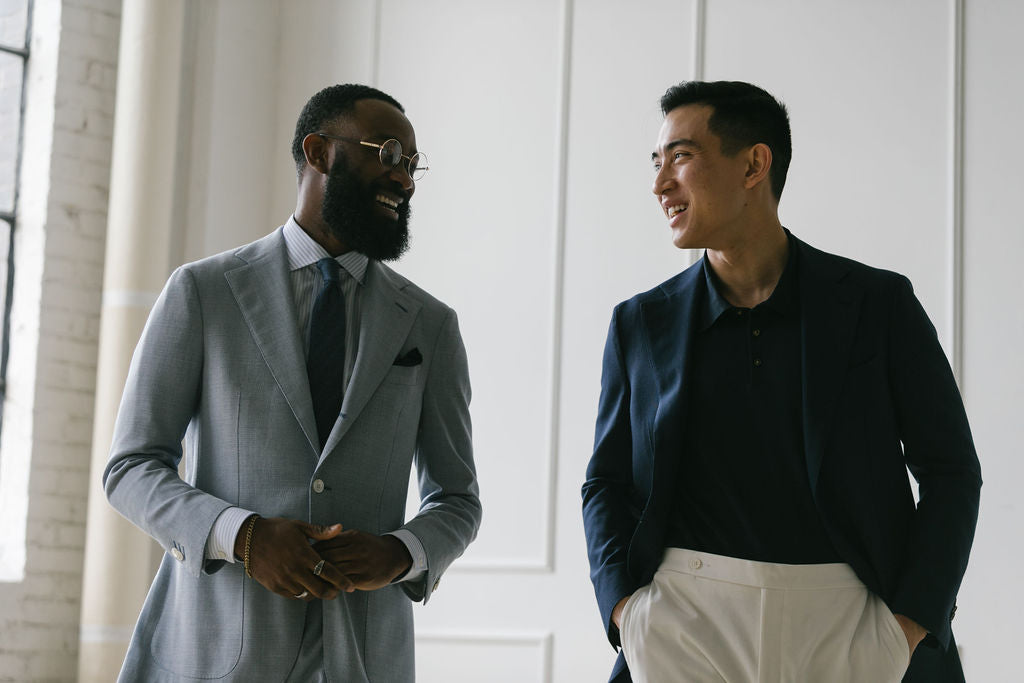

When it comes to wearing a suit well, details matter. One of the most overlooked—and most important—details is jacket length. Get it right and the suit looks balanced, confident, and intentional. Get it wrong and even the finest tailoring can look awkward.
Understanding proper jacket length is less about rigid rules and more about proportion.
The Traditional Jacket Length
Traditionally, a suit jacket should fully cover your seat. In practical terms, this means the jacket extends far enough to cover your backside and align cleanly with your proportions.
This length has endured for a reason. It creates balance between the upper and lower body and allows the jacket to sit naturally when buttoned or worn open. Jackets that fall well short of this point tend to look cropped and can exaggerate the torso at the expense of the legs.
The Cuffing Rule
A commonly referenced guideline is the cuffing rule. If you can comfortably wrap your hand around the bottom of the jacket and cuff it upward, the length is often in the right range.
That said, this is only a guideline—not a universal solution. Men with longer arms may find that following this rule results in a jacket that is visually too long. Proportion always matters more than formulas.
Sports Jackets vs Suit Jackets
Not all jackets follow the same rules. Sports jackets and casual tailoring are often cut slightly shorter than traditional suit jackets.
This subtle reduction in length gives the jacket a more relaxed, athletic feel and works well in less formal settings. The key is restraint. Shorter does not mean cropped. Even a sport jacket should still maintain visual balance and avoid looking truncated.
The Importance of the Buttoning Point
Jacket length and button placement are closely connected. On a single-breasted jacket, the buttoning point should generally align with your natural waistline.
If a jacket is too short, the button stance often creeps upward, making the torso appear compressed and throwing off overall proportion. A properly balanced jacket allows the button to sit comfortably at the waist, creating a clean division between upper and lower body.
Tailoring for Different Body Types
Body type plays a role in how jacket length is adjusted.
For shorter men, the jacket may occasionally be cropped slightly to visually lengthen the legs. This must be done carefully to avoid breaking traditional balance.
For taller men, the classic length that covers the seat and aligns through the crotch typically works best. Longer lines complement height and preserve elegance.
The Bottom Line
Jacket length isn’t about chasing trends or extremes. It’s about proportion, balance, and how the garment works with your body.
When the length is right, everything else falls into place. The suit feels natural, looks refined, and allows you to carry yourself with confidence.